
St. Croix Sanctuary Farms · A Kernel Collaborative concept
The Farm of Dreams
A remembered landscape, healed and put back to work.
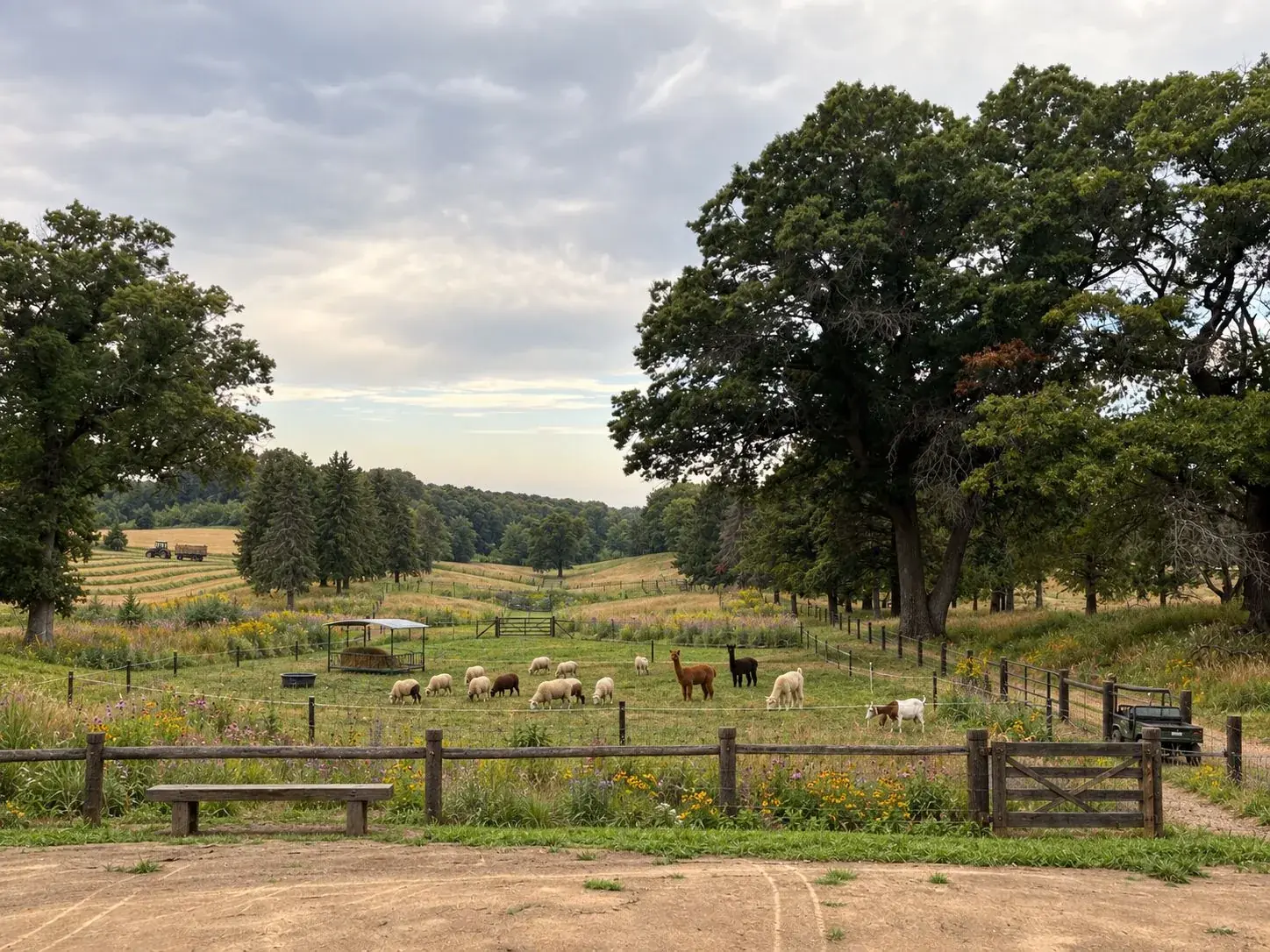
A conservation-led fiber farm and public gathering place — grown from a closed golf course above the St. Croix River. We heal the ground first, welcome people onto it early, and let the soil decide the rest.
Concept development · Ryan Corcoran / Kernel Collaborative · 2026
People + Animalsrhythm, care, belonging
Land + Waterhealed soil, prairie, clean runoff
Purpose + Belongingcommunity, service, restoration
In brief — Executive Summary
A closed course, healed and put back to work
The former St. Croix Valley Golf Course — nine holes above the St. Croix River, closed and long for sale — quietly restored into a conservation-led fiber farm and public gathering place, with a small restorative retreat someday at its center.
The plan does not scrape the land clean. It keeps the mature trees, the legacy greens, and the open rhythm the course is remembered for — and it heals the ground before asking anything of it. Decades of turf chemicals left soil that ended an earlier redevelopment; that same fact is the reason this land is worth saving, restoring, and keeping in community hands rather than paving.
People are welcome on the land from the start — it was never unsafe to walk. What waits on the soil is only what we would take from the ground to eat or drink. So the order is honest: prove the ground, farm it fiber-first out of the food chain, and let each later use arrive as a soil test clears it.
The farm is not a funder. It is the foundation — the ground on which community and purpose are built.
Illustrative concept
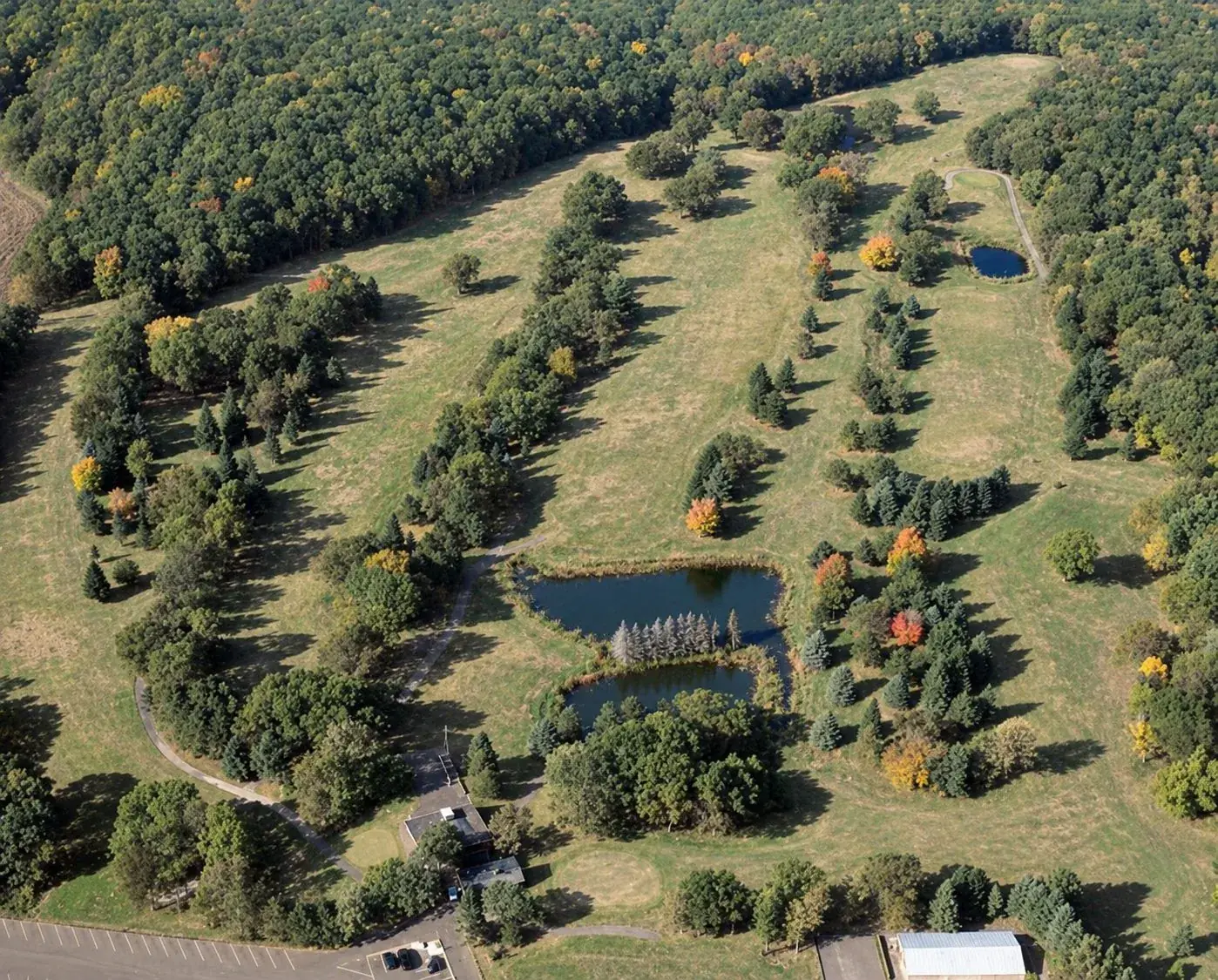
The same ground
Before & after, overhead
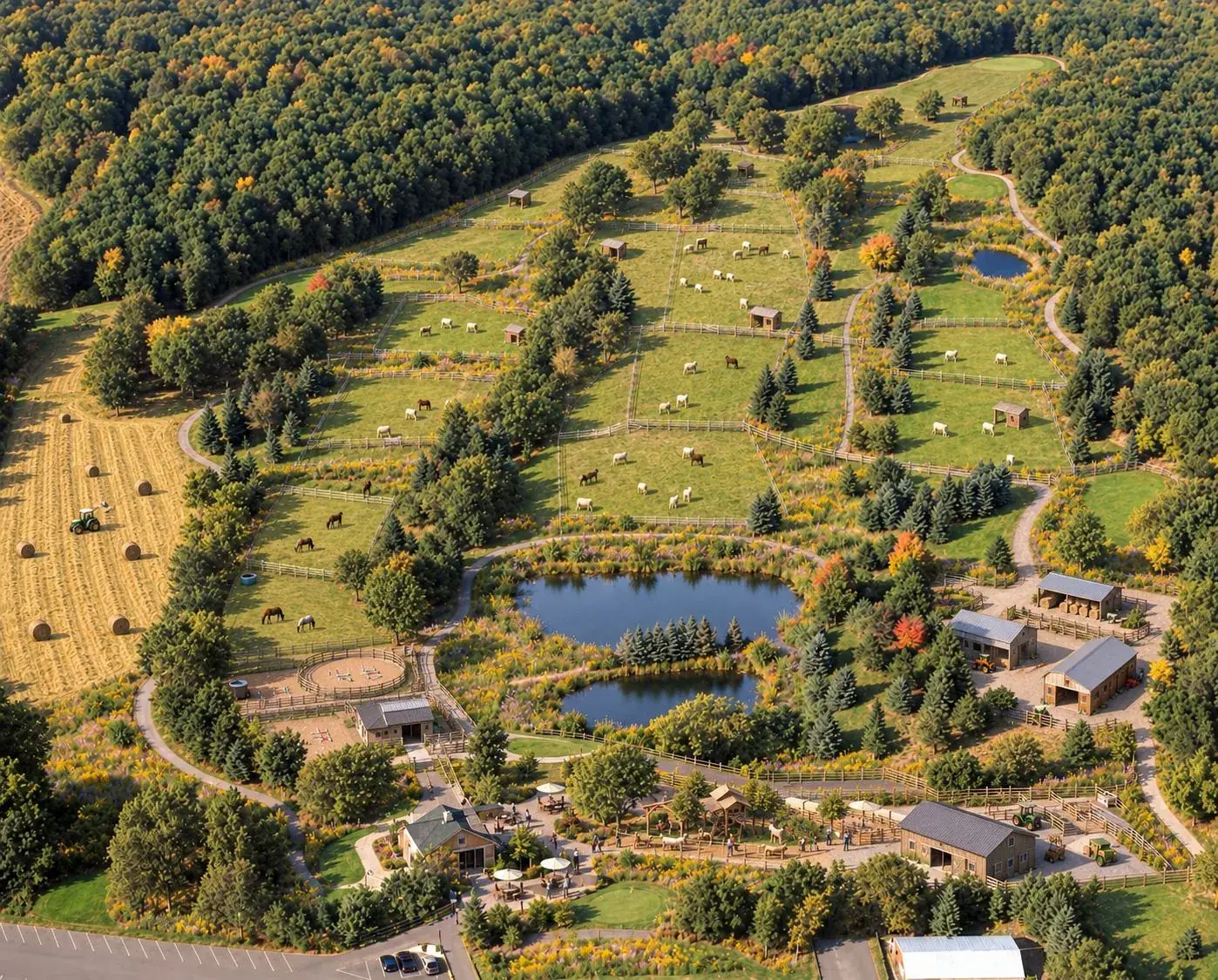
Drag the divider. The course geometry stays legible — center fairways become primary pasture, roughs return to prairie, and the recognizable open landscape remains.
How it comes back
What waits on the soil — and what doesn't
Two tracks move at once. People are welcome on the land from the start; only what we would take from the ground to eat or drink waits on a test.
The ground, step by step — gated by the soil
00Testknow the ground
A Phase II environmental assessment maps what is in the soil and exactly where — greens, tees, fairways and rough carry very different loads. Everything downstream reads from this.
unlocks → the whole path forward01Healrestore, not just remediate
Deep-rooted prairie and cover, soil rebuilding, and water-and-runoff repair — remediation carried out as regenerative restoration, held and led by River North Land Co as a living watershed laboratory.
gate → baseline set, restoration underway02Fibera farm that stays out of the food chain
Sheep, alpacas, and fiber goats — wool and fleece, not milk or meat. Fiber is the first harvest precisely because nothing about it travels from soil to plate. Operated by FarmCo.
gate → pasture cleared for grazing animals03Growas each result clears it
Food gardens, the apiary, a cafe kitchen and hospitality — each welcomed as its own soil result comes back clean. Anything we would eat or drink waits for that read; nothing else has to.
gate → each edible use, on its own result04Stayin time, a place to belong
A small, voluntary retreat — the Bunk House — welcomed once the land is well enough to hold people who live here. A place meant to help people feel whole should itself be whole.
welcomed when → the ground is ready to be lived on
In parallel · from the start
People are safe on the land now
Being on the ground was never the risk — only eating what grows in it. So people are welcome early: walking the grounds, a few legacy-hole golf games as fundraisers, horses through the pasture, the Double Cup coffee cart and truck, and the fiber house. None of it waits on the farm.
Concept
Appendix
The fuller almanac — read more if you want
The summary above is the whole idea in brief. Everything below is the detail behind it: the farm, the front door, the structure and its numbers, the mission, and the hands we’re looking for. Open what interests you.
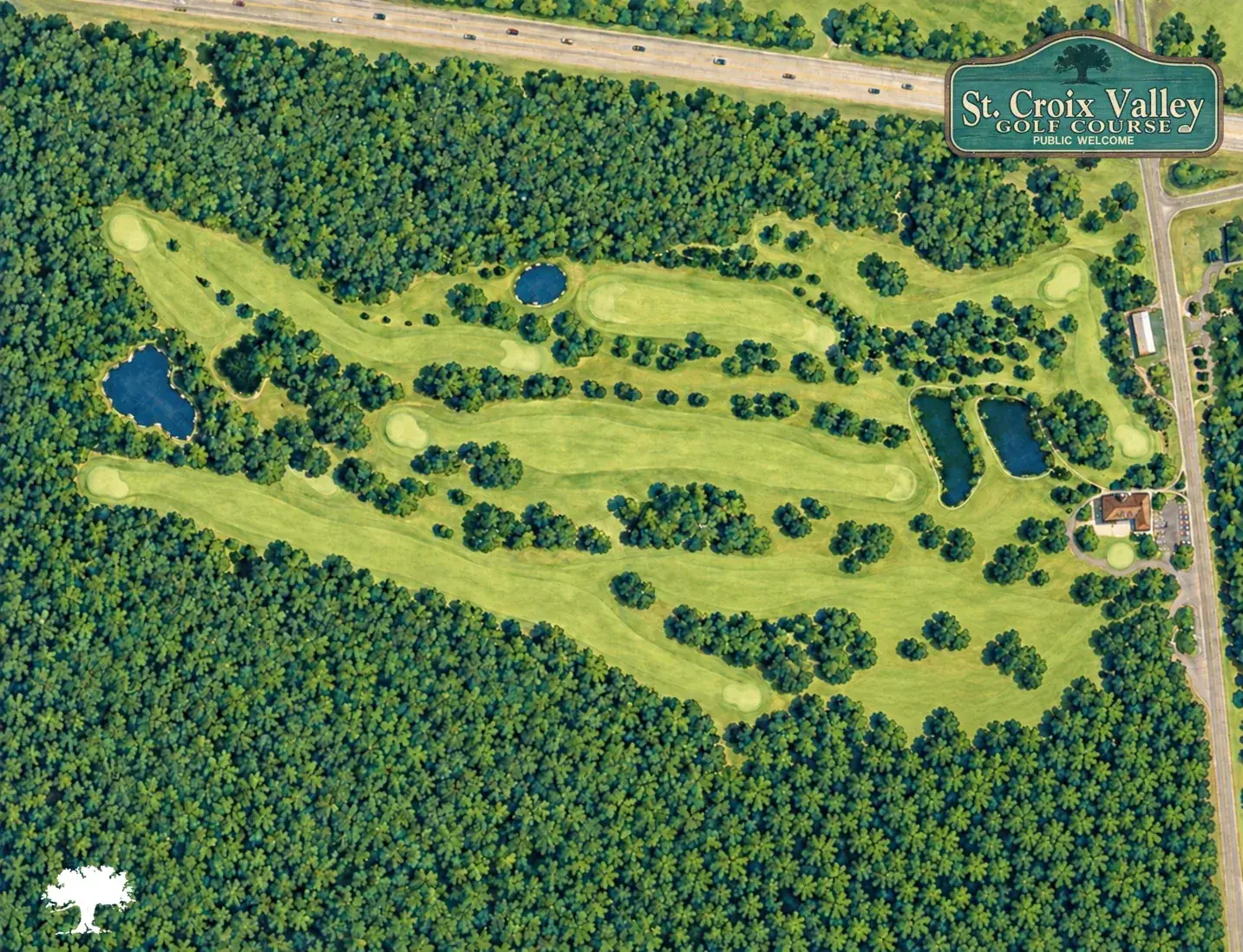
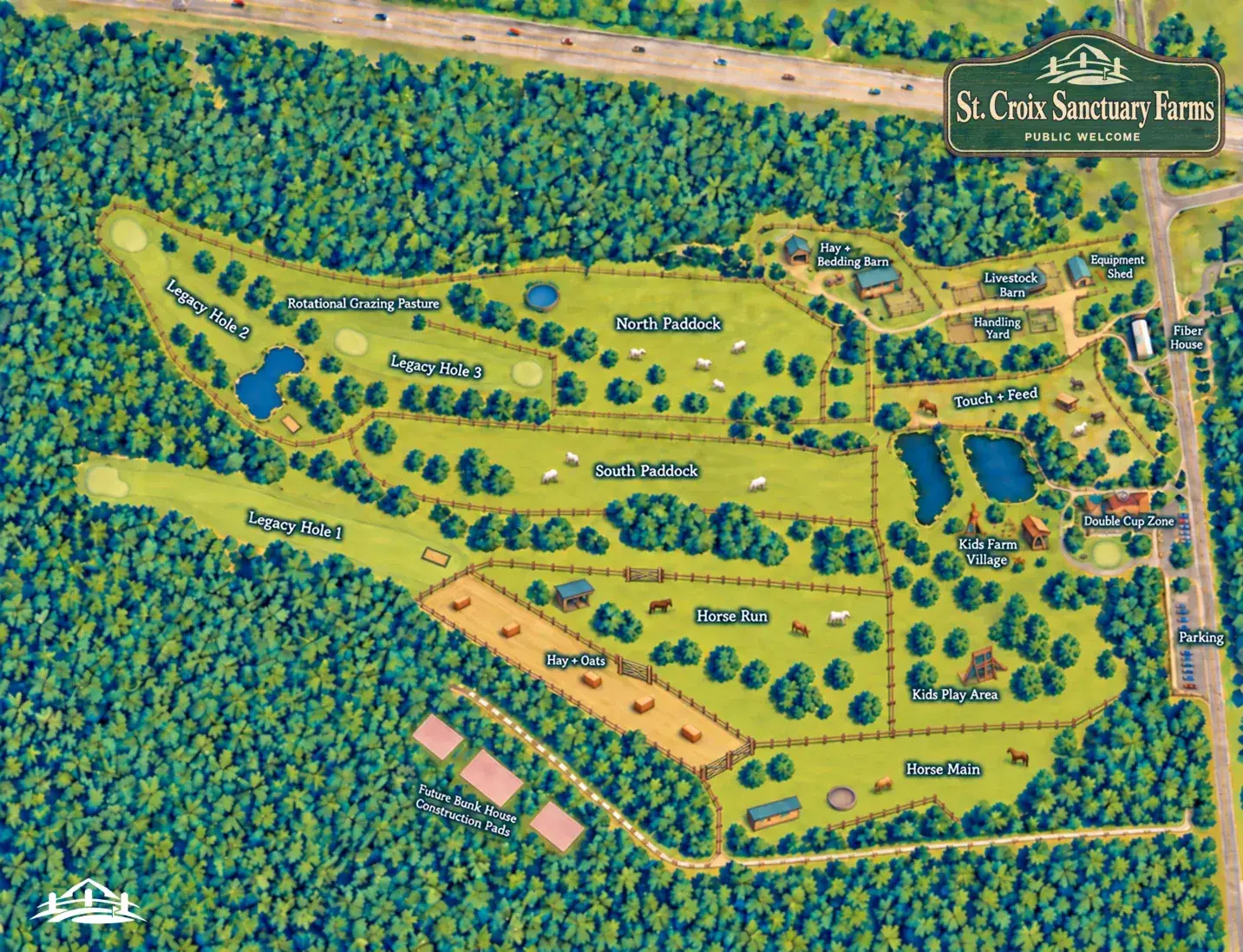
Plate IIIThe working fiber farm
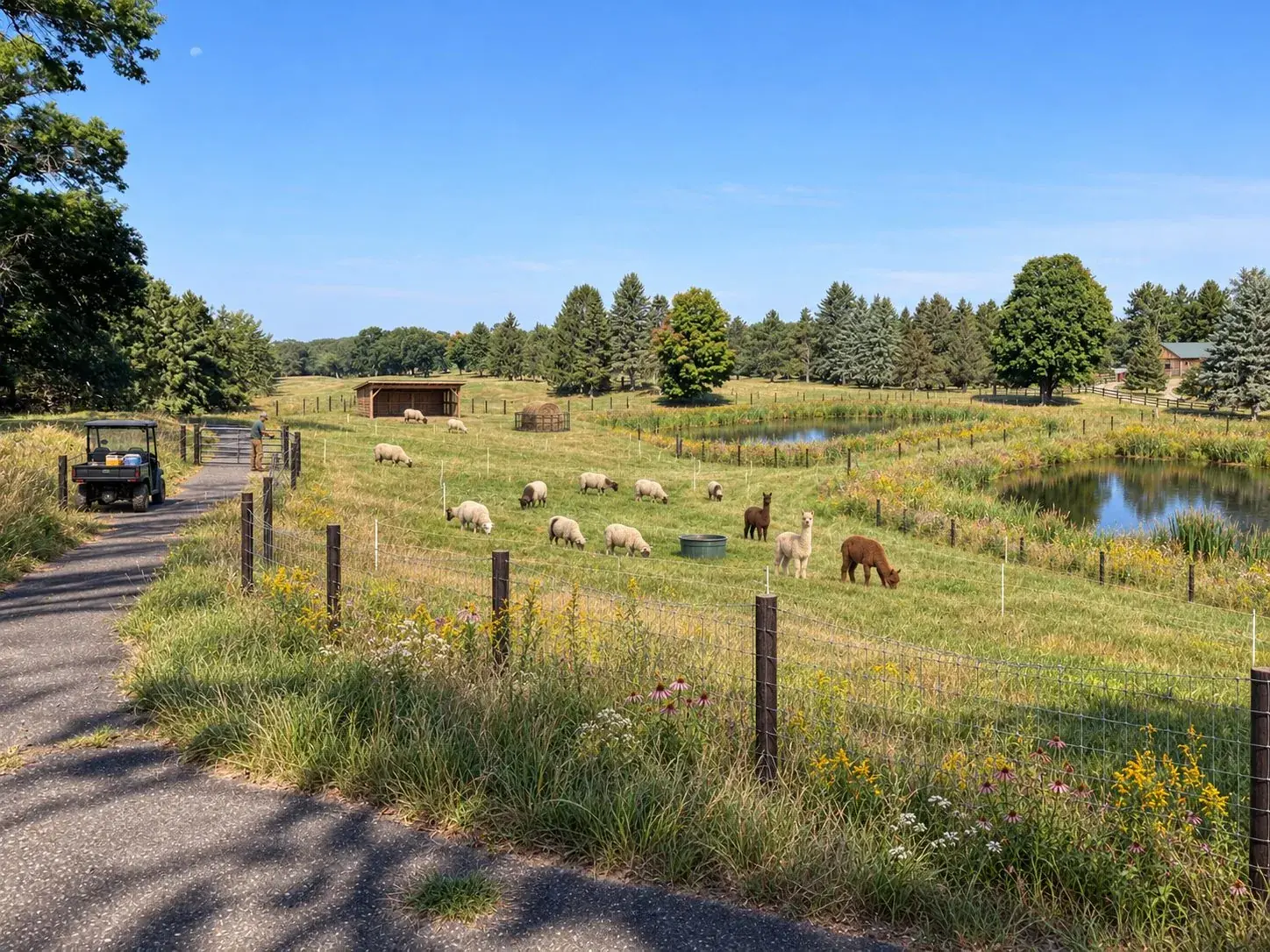
A fiber farm raises animals for their fleece — wool from sheep, soft fiber from alpacas. Animals arrive only after the systems that keep them well are in place, and the farm-to-yarn story is meant to be visible — shearing, skirting, and fiber prep where visitors can witness the work.
Animals + fiber
Begin with 8–12 sheep and 3–4 alpacas. Fiber goats are added only after care capacity is proven.
Rotational grazing, quarantine, winter feed, and veterinary systems precede any public encounter with the animals.
Land + water
Center fairways become primary pasture; connected legacy-hole land gives secondary rotation. The lower fairway carries hay and oats.
Prairie, shoreline buffers, pond buffers, and rain gardens protect habitat and water — with an apiary partner working the pollinator ground, once the soil clears it. Dairy and cheesemaking are out of scope.
Buildings + access
A renovated clubhouse, livestock barn, service yard, shelters, and covered feeding area anchor operations; the former cart-storage building is studied as the Fiber House.
Existing cart paths carry farm logistics, walking routes, and guided tours. Three legacy holes stay playable. Kids’ engagement stays beside supervised viewing — never inside working pasture.
The game stays in the ground
Not every fairway becomes pasture. A few legacy holes stay mown and playable — a green, a flag, a walk some families have taken for the better part of a century, and a natural way to bring people (and fundraisers) onto the land early.
Turning a golf course into a farm doesn’t have to mean erasing it. Keeping a little of the game keeps the neighbors, the owners, and the memory with the mission.
Illustrative concept
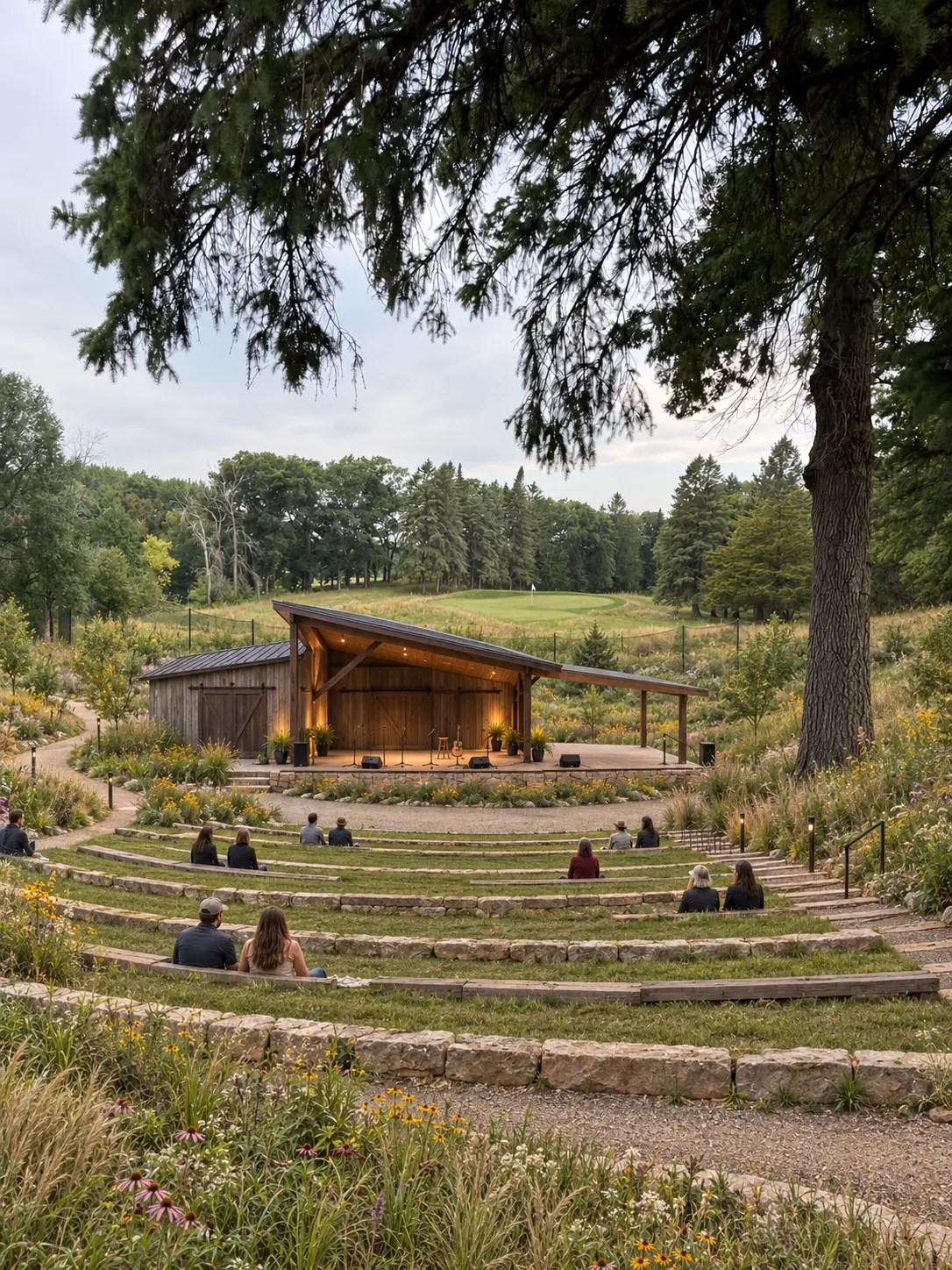
Plate IVDouble Cup — the front door
The invitation is built to grow with the farm, not ahead of it. A mobile coffee cart is the first threshold — a low-cost, low-risk way for neighbors, volunteers, and early supporters to witness the work before a single wall is renovated. It touches no soil, so it can be there from the start.
The cafe kitchen follows only once the farm can carry visitors safely and the ground beneath it clears.
EarlyCart
Double Cup Coffee Cart & TruckA mobile front door — coffee, presence, and a reason to come see the animals. On the land from day one.
LaterCafe
Double Cup CafeA clubhouse walk-up window, focused coffee, hard-scoop ice cream, and supervised family activity — a kitchen use gated on a clean soil result.
Illustrative concept
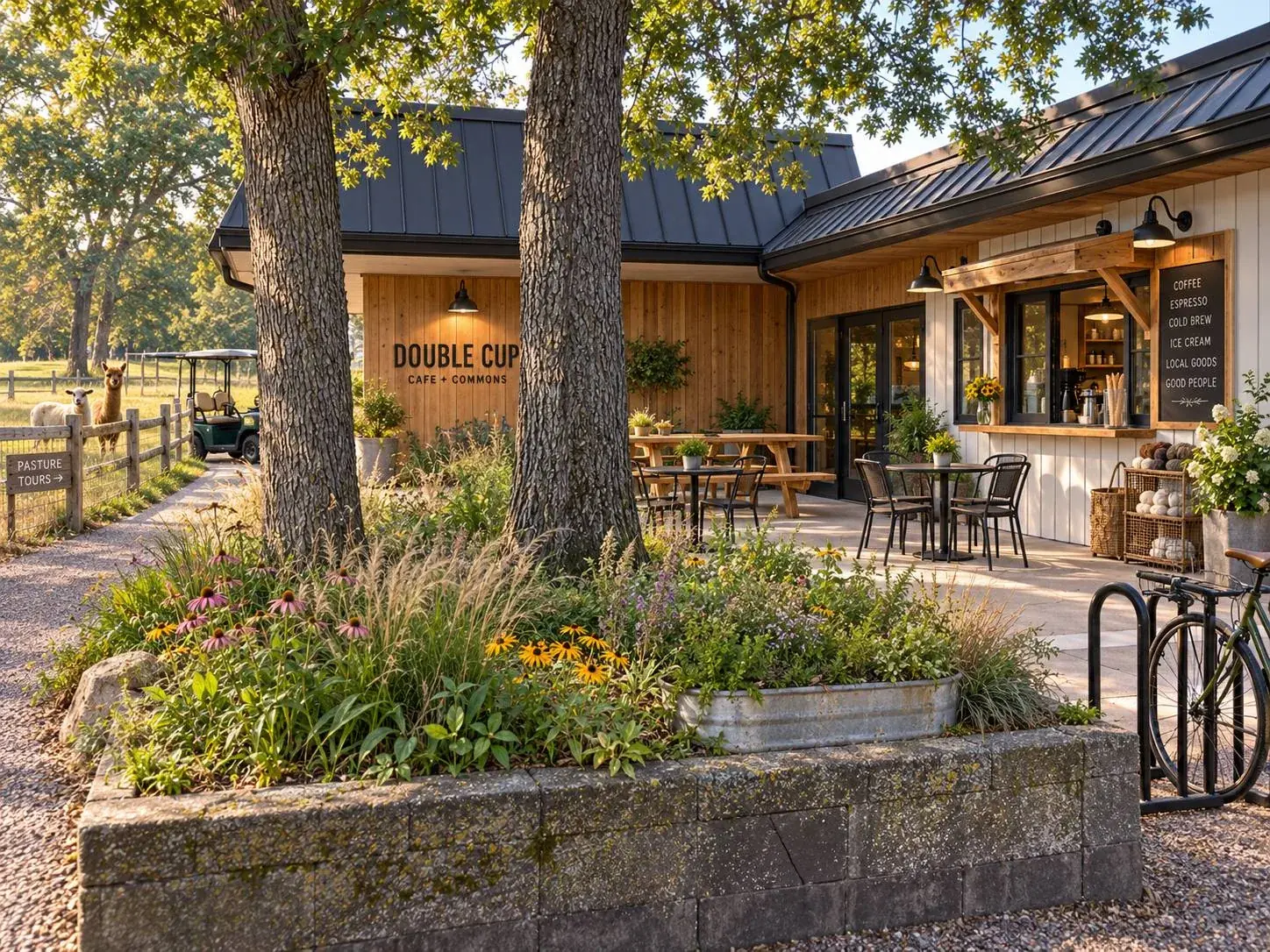
Plate VThe structure & the numbers
The land, the farm, the mission, and the front door are built as distinct entities by design — so each can be funded, governed, and proven on its own terms, and no one part carries another’s weight.
Holds the land
River North Land Co LandCo
conservation
Owns and protects the ground, and runs all conservation — acquisition pipeline, easements, restoration, and the watershed program. Land capital is raised and held apart from the farm build.
Runs the farm
FarmCo
production
The working fiber operation — livestock, pasture, hay and oats, fiber to yarn. The one entity this capital view is scoped to.
Carries the mission
Growing Pastures Foundation nonprofit
education & community
Education, community programs, volunteering, and public benefit — the reason the farm exists beyond what it produces.
Opens the door
Double Cup Cafe
hospitality
The public welcome — coffee cart, then cafe. Its own economics, built and funded on its own line.
How they hold together. River North Land Co stewards the ground and leases it to FarmCo, which does the daily work. Growing Pastures Foundation brings people, education, and purpose onto the land. Double Cup Cafe opens the gate to the public. The future Bunk House is a separate entity and a separate capital decision — deliberately last.
The farm is not a funder. It is the foundation — the ground on which community and purpose are built.
River North Land Co · A living watershed laboratory
The land goes back to work gently — a conservation-led fiber farm and public demonstration property where rotational grazing, restored prairie, crop production, runoff controls, and visitor education coexist. Beyond the farm itself, the property can serve as a real-world test and demonstration site for farm-runoff solutions and land-and-water stewardship:
- 1Establish a baseline — soil, vegetation, drainage, and water-quality conditions.
- 2Pilot practical interventions — managed grazing, native buffers, swales, stabilized crossings, manure controls, and reduced-input crop systems.
- 3Measure outcomes with credible technical partners.
- 4Host field days and public interpretation.
- 5Publish an approved case study that other landowners and commercial solution providers can use.
In scope — farm capex (FarmCo)
- Farm buildings & livestock facilities
- Pasture conversion, water & runoff (redevelopment)
- Vehicles & major equipment
- Opening livestock, supplies & reserves
Held apart — not in this number
- Land acquisition — carried by the conservation pipeline
- The future Bunk House — a separate, later decision
- Double Cup Cafe — built and funded on its own line
- Growing Pastures Foundation — nonprofit startup & programs
$1.9–2.5M
Year 1 farm establishment — a buffered planning range for FarmCo.
Land, apart
The cost of the ground runs through conservation, off the farm books.
Farm ≠ funder
The farm is the foundation for community and purpose — not the thing that pays for the rest.
Year 1 farm capex — line by line
- Planning, design + engineering
- $110–160K
- Licensing, permits + farm approvals
- $60–110K
- Buildings + livestock facilities
- $750–900K
- Pasture conversion, water + runoff · redevelopment
- $480–620K
- Vehicles + major equipment
- $180–250K
- Opening livestock + supplies
- $40–70K
- Construction contingency
- $180–260K
- Pre-opening operating reserve
- $90–140K
- Farm establishment total
- $1.89–2.51M
Farm establishment only — order-of-magnitude planning ranges, each line carrying its own buffer, with construction contingency on top. Farm maturity (visitor-safe systems, expanded livestock, and equipment) is a later, separately-scoped farm investment. Land, the Bunk House, and Growing Pastures Foundation sit outside this figure, and Double Cup Cafe is built and funded on its own line — none counted here.
Plate VIThe mission & what comes next
Growing Pastures Foundation
The nonprofit that carries the purpose.
Daily work on a real farm is the teacher. The Foundation turns it into hands-on education, school and group programs, volunteer and service pathways, and fiber-arts learning — all on an open public commons where neighbors gather.
Service and belonging are the point. This is where the farm earns its meaning: a foundation for community and purpose, not a funder of it.
- Education & school-group programs on a working farm
- Volunteer & service pathways for neighbors and partners
- Fiber arts, animal care & farm skills
- A public commons for gathering, markets & seasonal days
A future chapter — excluded from this plan
The Bunk House
Someday, once the farm’s rhythm and community are real — and the ground is proven whole — a small residential place could grow here: a restorative, low-acuity stay for people in the “missing middle” between everyday support and the hospital.
Voluntary, humane, and modest in scale. Not a hospital, not a crisis unit, not locked care — a place to steady, do good work, and return to ordinary life.
Deliberately last: welcomed only after the farm, the mission, and the community are real. A separate entity and a separate capital decision — held apart from everything above.
Plate VIIHands we’re looking for
The project converts unknowns into partnerships before it converts them into buildings. If one of these is yours, this is the conversation to have.
Farm operatorBudget, staffing, production, and daily systems
Sheep + alpaca mentorsBreeds, handling, welfare, shearing, and fiber
Veterinarian + nutritionistHerd health, quarantine, and feed plans
Crop / forage partnerPasture, hay, oats, and custom harvesting
Watershed teamCivil engineer, NRCS / UW-Extension, conservation
Conservation partnerEasement, acquisition pipeline, and land stewardship
Environmental consultantPhase I / II assessment and remediation-through-restoration
Apiary partnerBeez Kneez and the wider St. Croix bee community
Double Cup operatorCart, cafe, food licensing, hospitality economics
Foundation leadershipGrowing Pastures Foundation — programs, education, volunteers
BH / SUD recovery networkBehavioral-health & substance-use recovery community and referrals
Capital + philanthropyGovernance, campaign, and access-fund partners
The invitation
A dream is only worth building if it’s shared
The Farm of Dreams sets out to do something quietly ambitious: heal a landscape people love, put it back to honest work, and grow a place where community, education, and purpose take root — with a restorative home for the missing middle someday at its center.
Building it is a monumental effort. But what would dreams be if they weren’t shared? This is an open hand to the people who could help make it real — owners, farmers, conservationists, educators, and neighbors who want to see this ground live again. If one of those hands is yours — or you’d simply like to walk the land — that’s the conversation to start.
Ryan Corcoran
Concept origin & development · Kernel Collaborative
ryan-corcoran.com
The full concept workspace — visual library, land, farm, funding, and market pages — is available to partners on request.